Services
We provide compassionate, evidence-based therapy for people across the lifespan.
Our work centres on creating a safe, steady, and supportive space where you or your child can process difficult experiences and move toward lasting emotional wellbeing.
For enquiries, email: admin@thelifestorypractice.com.au
To speak to the practice, Phone: 7083 8777 or 0413 006 336. Please leave a message if we are unable to answer immedietly
On the first week of August 2026, we open Aldinga's first dedicated mental health clinic. Come visit us to see how we can help. 1 A Old Coach Road, Aldinga
Child Therapy

At The Lifestory Practice, we provide a warm, safe and developmentally appropriate environment where children can express themselves, build skills and work through emotional or behavioural challenges.
Children do not always have the words to explain what they are feeling. Our therapists may use play-based, creative and evidence-informed approaches to help children communicate, understand their emotions and develop practical coping strategies.
Child therapy may support children experiencing:
-
Anxiety, worries or fears
-
Emotional regulation difficulties
-
Grief, loss or family separation
-
Trauma or significant life changes
-
Low confidence or self-esteem
-
Friendship or social difficulties
-
Behavioural challenges
-
Adjustment to an autism or ADHD diagnosis
-
School-related stress or difficulties
We work collaboratively with parents and caregivers while respecting the child’s privacy and therapeutic relationship. Where appropriate and with consent, we may also collaborate with schools and other professionals involved in the child’s care.
Our goal is to help each child feel understood and supported while strengthening their emotional resilience, relationships and confidence.
Individual Adult Therapy

At The Lifestory Practice, we provide respectful, evidence-informed therapy for adults experiencing mental health concerns, relationship difficulties, challenging life circumstances or significant periods of change.
Our therapists offer a safe and non-judgmental space to explore your experiences, understand patterns and develop practical strategies that support meaningful and sustainable change. Therapy is tailored to your individual needs, strengths and goals.
We support adults experiencing:
-
Trauma, complex trauma and PTSD
-
Anxiety and depressive disorders
-
Emotional dysregulation
-
ADHD, autism and other neurodivergent experiences
-
Eating disorders and disordered eating
-
Attachment and relationship concerns
-
Grief, loss and adjustment difficulties
-
Substance use concerns
-
Self-harm and other harmful coping behaviours
-
Anger-management concerns
-
Gambling, risk-taking and impulsive behaviours
-
Stress, burnout and major life transitions
-
Aged-care transitions and changes in independence
-
Service-related mental health concerns for veterans and DVA clients
Our approach recognises that mental health is shaped by each person’s relationships, experiences, environment and individual story. We work collaboratively with you to strengthen emotional resilience, improve wellbeing and support you to move towards the life and relationships that matter to you.
Couple or Family Therapy

Relationships matter, whether between partners, parents, children, siblings or within blended and extended families. At The Lifestory Practice, we provide couples and family therapy to support connection, understanding and emotional safety within important relationships.
Therapy can be helpful during periods of conflict, grief, separation, parenting stress, major life transitions or when communication and connection have become difficult. We work with couples and families across the lifespan to repair relationship ruptures, strengthen emotional bonds and develop healthier patterns of interaction.
Our approach is warm, respectful and evidence-informed. With couples, we support open communication, emotional insight and practical strategies for managing conflict and rebuilding connection. When working with children and young people, we may incorporate play-based and creative approaches to help them communicate in ways that feel natural and safe.
Couples and family therapy can help:
-
Improve communication and reduce conflict
-
Strengthen trust, attachment and emotional connection
-
Navigate separation, co-parenting or blended-family dynamics
-
Address parenting challenges and differences
-
Process shared grief, trauma or major life changes
-
Increase understanding of emotional or behavioural concerns
-
Develop healthier boundaries and relationship patterns
-
Build resilience within couples and family systems
Our goal is not to assign blame or determine who is “right.” We help each person feel heard and understood while supporting meaningful changes that improve relationships and wellbeing.
Support and Therapeutic Groups

At The Lifestory Practice, our facilitated groups provide a safe and supportive space to learn, connect with others and develop practical strategies. Groups are designed for different ages, needs and stages of life.
Our upcoming groups include:
-
Understanding your autism diagnosis
-
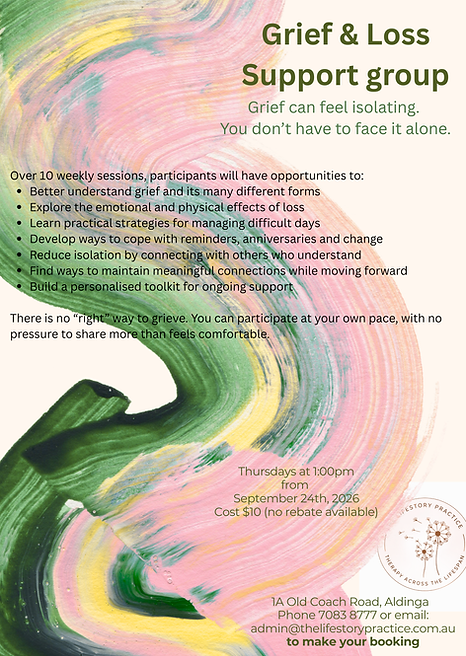
Loss and grief support
-
Living with depression
-
Understanding and managing Borderline Personality Disorder (BPD)
-
Life coaching and personal development
Groups may include psychoeducation, guided discussion, practical activities and evidence-based strategies. Programs will be offered throughout the year, subject to participant numbers. Contact our team to register your interest or learn about upcoming dates.
ASD & ADHD Children’s Emotional Regulation & Coping Skills Group

A trauma-informed, therapeutic group program supporting children to build emotional awareness, regulation skills, and coping strategies to improve daily functioning at home, school, and in social settings.
This group is suitable for children with emotional regulation difficulties, anxiety, trauma-related presentations, and behavioural challenges.
Children participating in this group will be supported to improve their ability to identify emotions, regulate emotional responses, and apply coping strategies during times of distress. The program focuses on building functional skills that enhance participation in daily routines, learning environments, and peer relationships.
-
Age group: 5-6 or 7–9 years
-
Group size: 4–6 children
-
Duration: 8-week program
-
Session length: 50 minutes
-
Delivery: In-person
-
NDIS self-managed and plan-managed participants welcome
-
Capacity Building – Improved Daily Living
-
Small group format to support safety and engagement
NDIS Supports

At The Lifestory Practice, we provide individualised, evidence-informed services for children, adolescents and adults living with disability. We work collaboratively with participants, families, carers and support teams to provide purposeful supports aligned with each participant’s needs and NDIS goals.
Our NDIS services may include:
-
Individual therapeutic support
-
Positive Behaviour Support Plans
-
Psychosocial and functional assessments
-
Cognitive and adaptive functioning assessments
-
Emotional regulation and coping-skills development
-
Social and relationship skills
-
Capacity building and increased independence
-
Support with life transitions and adjustment
-
Parent, carer and family consultation
-
Therapy-assistant supports under appropriate supervision
-
Progress reports and recommendations for plan reviews
-
Collaboration with support coordinators and other providers
We take a strengths-based and person-centred approach, focusing on each participant’s abilities, preferences and priorities. Supports may address practical barriers, strengthen relationships, build everyday skills and increase participation in home, education, employment and community life.
Services are tailored to the participant’s funded supports and can be provided in our Aldinga clinic, by telehealth or within the community when clinically appropriate. We welcome self-managed and plan-managed NDIS participants. Access to services is subject to funding, suitability and clinician availability.
Psychological and Diagnostic Assessments

At The Lifestory Practice, we provide comprehensive psychological, cognitive, developmental and adaptive functioning assessments for children, adolescents and adults. Assessments are carefully selected according to each person’s needs, circumstances and referral questions.
Our assessment services include:
-
Cognitive assessments using the Wechsler Intelligence Scale for Children (WISC) and Wechsler Adult Intelligence Scale (WAIS)
-
Neuropsychological screening using the Repeatable Battery for the Assessment of Neuropsychological Status (RBANS)
-
Adaptive functioning assessments using the Vineland Adaptive Behavior Scales and Adaptive Behavior Assessment System (ABAS)
-
Cognitive screening using the Montreal Cognitive Assessment (MoCA)
-
Autism Spectrum Disorder (ASD) assessments
Where appropriate, assessments may include clinical interviews, standardised testing, behavioural observations and information from parents, carers, teachers or other professionals. Findings are presented in a clear written report outlining results, identified strengths, areas requiring support and practical recommendations.
Assessments may assist with diagnostic clarification, treatment and educational planning, NDIS applications and reviews, and recommendations for appropriate supports. Assessment options and fees vary depending on the referral question and the level of reporting required.
Community Education and Guest Speakers

At The Lifestory Practice, we believe accessible mental health information can strengthen individuals, families and the wider community. We host community education sessions featuring experienced guest speakers who share practical, evidence-informed information on mental health, wellbeing and important life issues.
Sessions may explore topics such as:
-
Anxiety, depression and emotional wellbeing
-
Autism, ADHD and neurodiversity
-
Parenting and family relationships
-
Grief, loss and major life transitions
-
Trauma, resilience and recovery
-
Disability, inclusion and navigating support systems
-
Healthy relationships and effective communication
-
Sexual health
Our community events are designed to be welcoming, informative and practical, with opportunities to learn, ask questions and connect with others. Speakers and topics will vary throughout the year. Contact our team or follow The Lifestory Practice on social media for upcoming events.
Referral Pathways, Fees and Funding

Referral Pathways
We aim to make accessing support at The Lifestory Practice simple and straightforward.
We accept:
• Mental Health Care Plans (Medicare)
• NDIS (where therapy supports are included in your plan)
• Private referrals
• Self-referrals
• Third-party referrals (including approved external agencies and funders)
You do not always need a referral to access therapy. Individuals and families are welcome to contact us directly to enquire about services.
Fees & Funding
The Lifestory Practice accepts referrals under:
• Medicare Mental Health Care Plans
• NDIS (where applicable)
• Private payment
• Approved third-party funders
Medicare rebates are processed promptly following full payment of your session fee.
We also accept self-funded clients and, where eligible, private health insurance rebates may be available depending on your level of cover. Please check directly with your insurer.
NDIS services are billed in accordance with current NDIS pricing arrangements.
Out-of-pocket costs or gap fees may apply depending on your referral pathway and funding arrangements.
If you are unsure which pathway applies to you, our team is happy to guide you through your options.
Getting started

Starting therapy can feel like a big step — we aim to make the process clear and supportive from the very beginning.
Step 1: Get in Touch
Contact us via phone or email to discuss your needs, ask questions, and explore the most suitable referral pathway for you.
Step 2: Referral (If Required)
If you are accessing support through a Mental Health Care Plan, NDIS, or a third-party funder, you can arrange for your referral documentation to be sent to us. Self-referrals are always welcome.
Step 3: Initial Appointment
Your first session focuses on understanding your goals, current challenges, strengths, and what you would like to achieve through therapy. We will also explain how sessions will work and answer any questions you may have.
Step 4: Ongoing Support
Together, we develop a clear and collaborative plan tailored to your needs. Therapy moves at a pace that feels safe and purposeful for you or your family.
If you’re unsure whether therapy is the right fit, we welcome you to reach out for a brief discussion — we are here to help you make an informed decision.